
Three Contemporary Voices in Ceramic Practice
For centuries, ceramics have been one of the ways the world has come to know China.
From ritual vessels to imperial wares, and from utilitarian objects to refined craftsmanship, ceramic practice has long been embedded in Chinese life, history, and material culture.
Yet today, what we explore at Gallery SOTACA is neither the preservation of tradition nor the reproduction of historical forms.
Our inquiry is at once simpler, and more demanding:
How can ceramics be re-read, re-thought, and extended in the present moment?
In this journal, SOTACA presents the work of three contemporary artists whose practices are rooted in China. While their methods, visual languages, and emotional registers differ profoundly, they are united not by lineage or nostalgia, but by an unwavering originality of approach to material, process, and expression.
Together, their practices reveal that contemporary Chinese ceramics are not a singular narrative, but a vital constellation of individual voices.
Darren Dai: Hand-Built Narratives
Darren Dai works through traditional hand-building techniques, approaching clay in its most direct and intimate form. His process is simple and unadorned, yet deeply intentional.
Rather than pursuing complexity in structure, he allows emotion and narrative to emerge through touch. Each sculpture carries a quiet story, shaped slowly by the hand, where gesture, rhythm, and restraint give rise to poetic presence.
His works do not seek monumentality. They remain gentle, intimate, and human, inviting viewers to pause and enter a small, contained world of feeling.
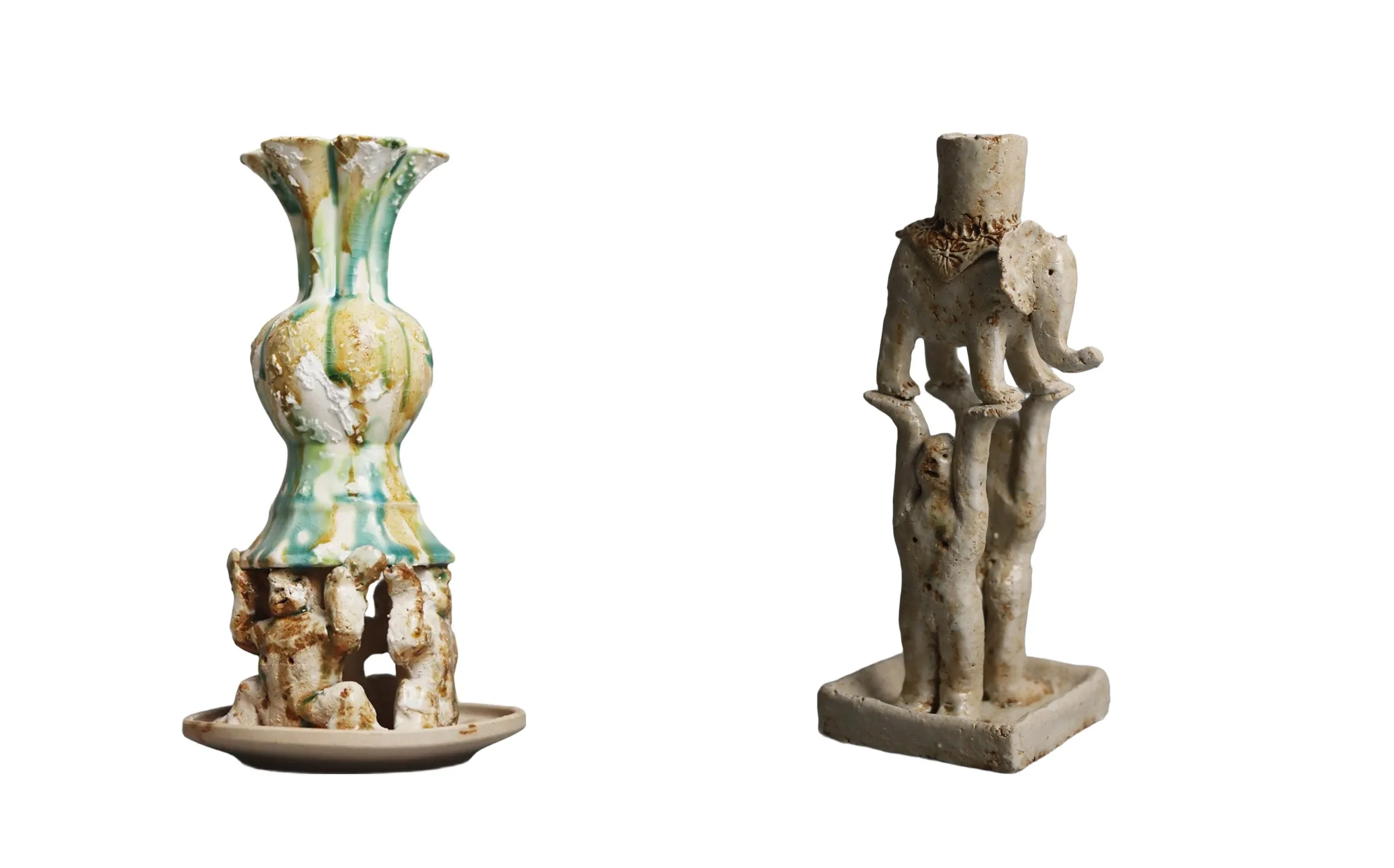
Hand-built ceramic figures by Darren Dai.
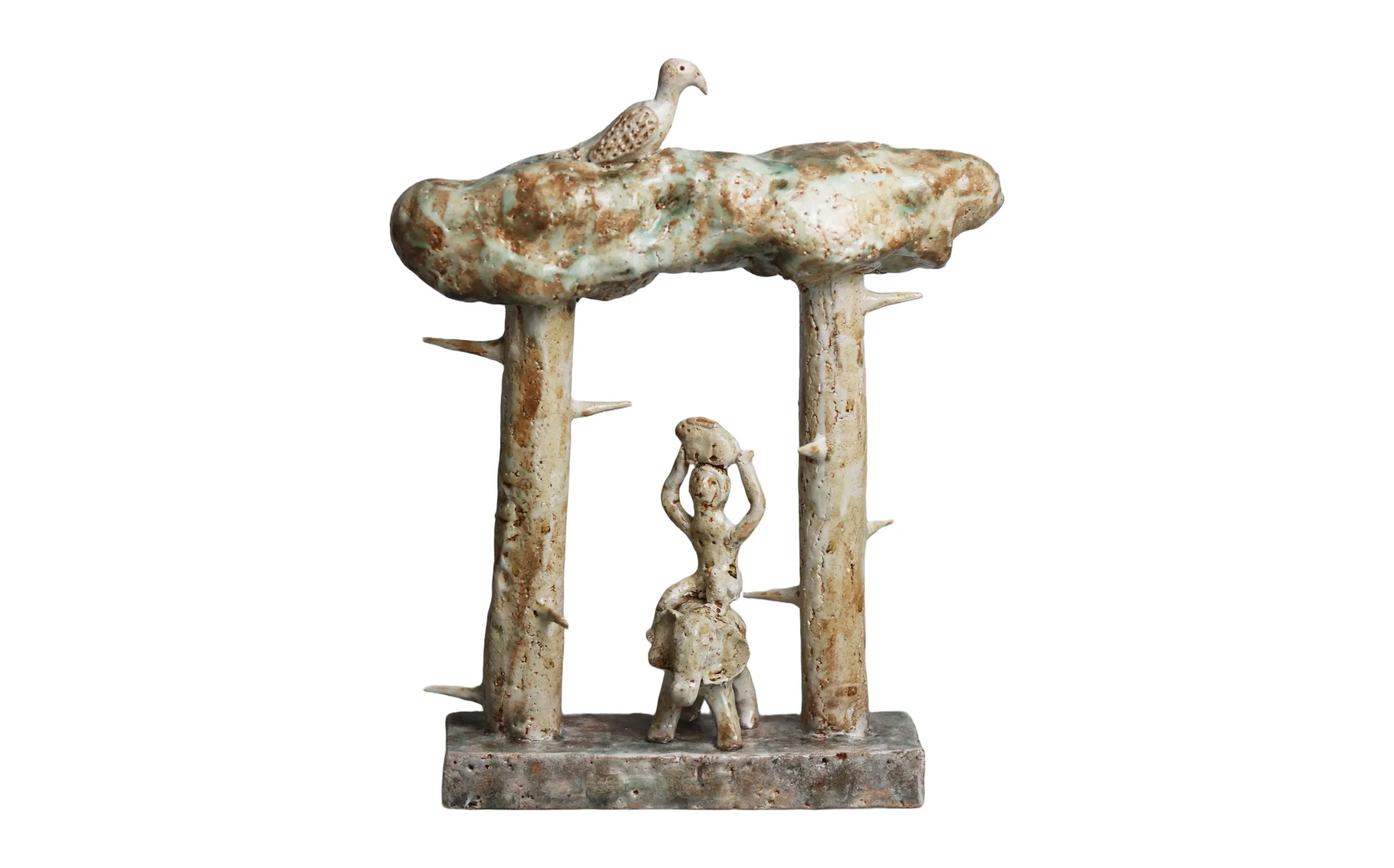
Hand-built ceramic sculpture with a quiet, symbolic narrative.
Renqian Yang: Organic Form and Controlled Spontaneity
Renqian Yang’s ceramic works appear intuitive and light, shaped by movement rather than assertion. At first glance, her forms feel spontaneous, as if the clay simply decided to unfold in a particular direction.
Yet this looseness is meticulously held. Her practice is defined by a delicate balance between dualities: structure and freedom, softness and control, the man-made and the natural. Using her signature paper clay technique, she builds through a somatosensory-guided process in which organic shapes emerge without descending into chaos.
Nothing feels forced, yet nothing feels accidental. Her ceramics do not impose meaning or demand interpretation. Instead, they invite proximity and a quiet, rhythmic engagement. What she offers is what critics have described as “porcelain prose”: a way of understanding the medium through touch, sensitivity, and the breathing of form.
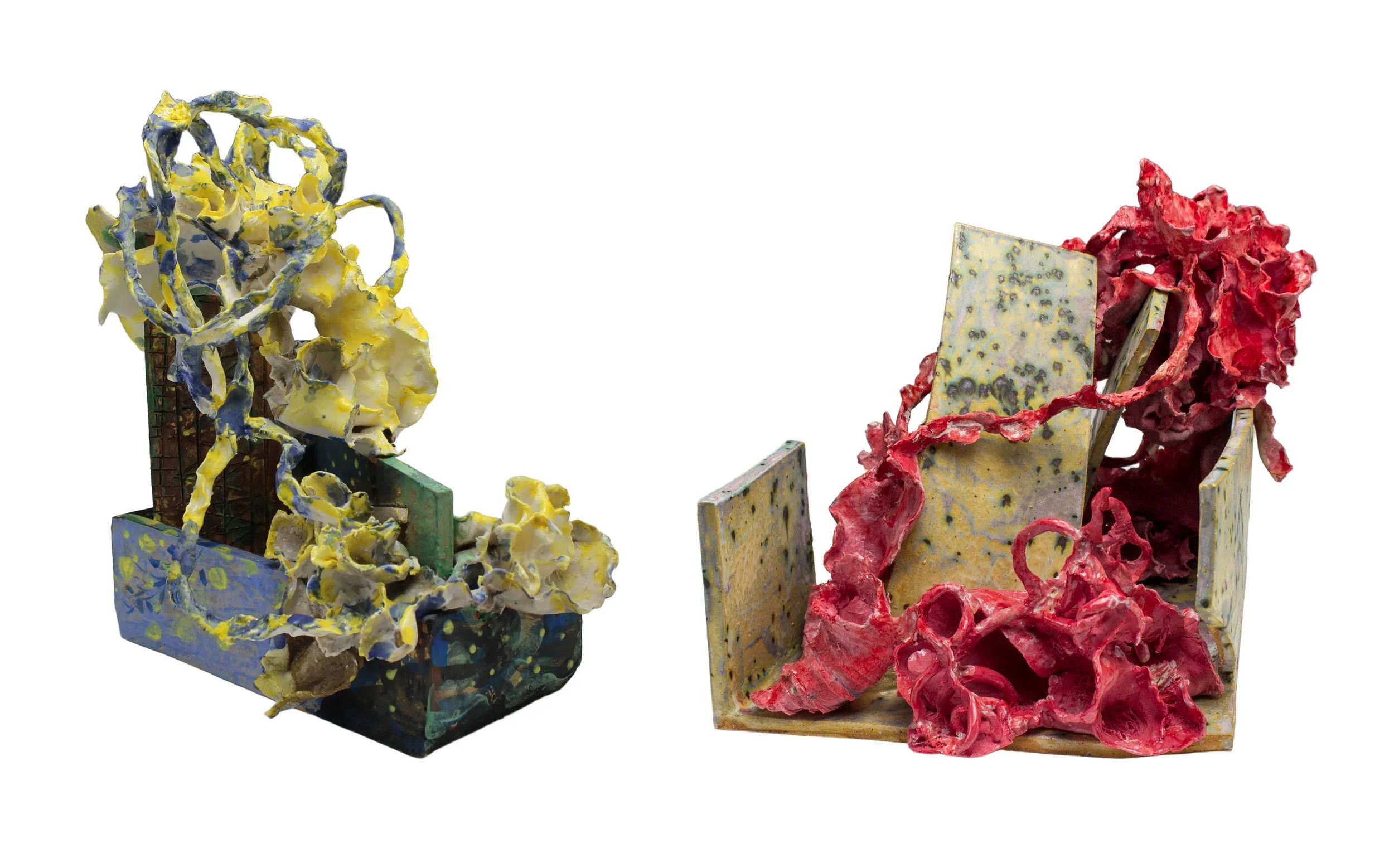
Renqian Yang, ceramic sculptures
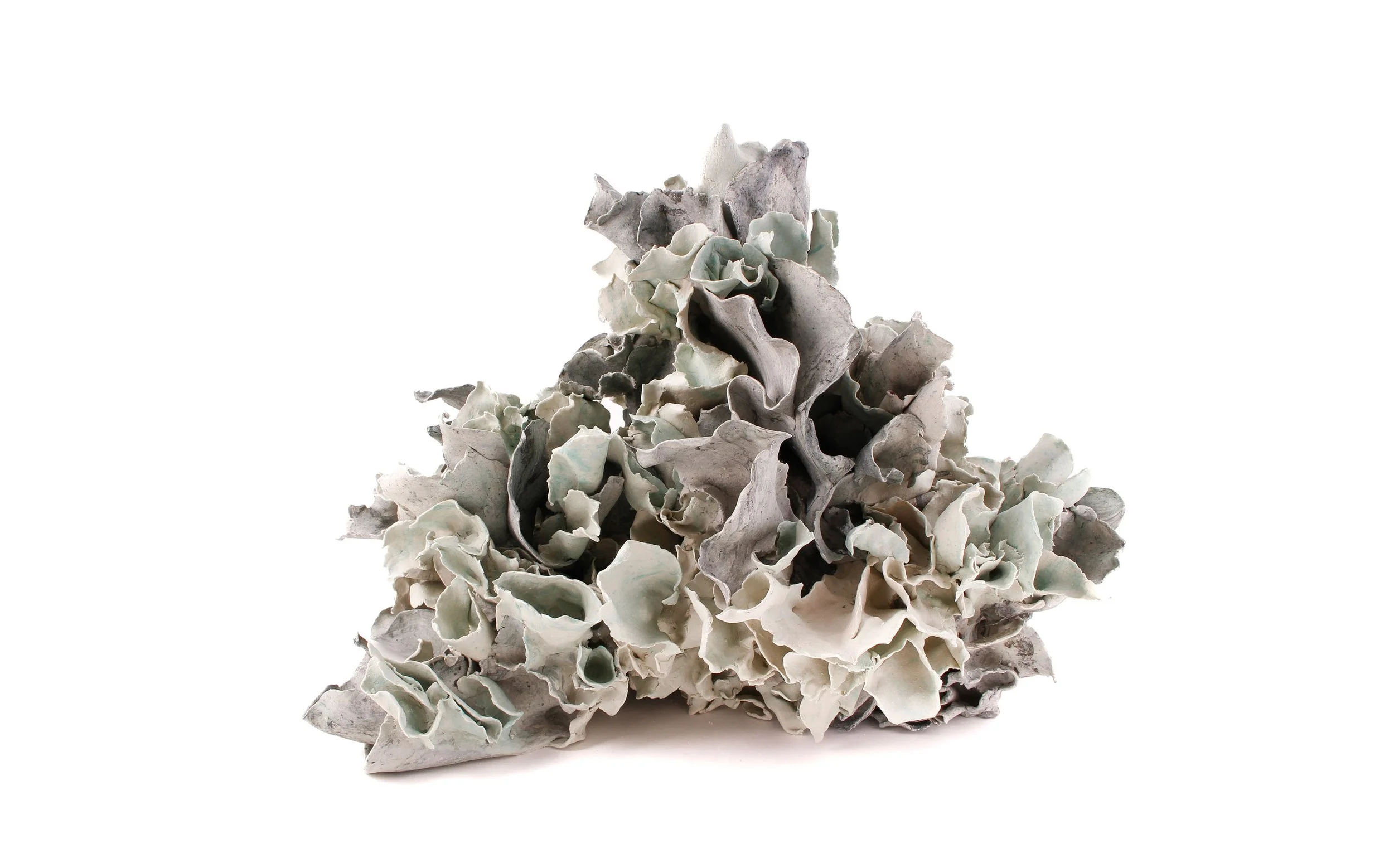
Ceramic sculpture by Renqian Yang, layered porcelain form.
SMOGE SPACE:Subtraction, Structure, and Sculptural Gravity
SMOGE SPACE works exclusively with black ceramics. By entirely removing color, they strip the medium down to its most essential elements: form, weight, and surface.
Unlike conventional ceramic practices that build through addition and modeling, SMOGE SPACE approaches clay through subtraction. The material is treated less as pliable earth and more as stone, cut into, resisted, and gradually revealed through carving.
This process fundamentally alters our perception of ceramic making. The works feel less “made” than excavated, as if drawn out from within the material itself. What emerges is not softness or decoration, but a powerful sculptural presence, grounded and restrained, charged with physical tension.
From a historical perspective, Chinese ceramics have long been celebrated for their refinement of form, glaze, and technique across dynasties. SMOGE SPACE extends this lineage not by revisiting surface or ornament, but by rethinking the very relationship between maker and material.
Their works exist in the liminal space between vessel and sculpture, refusing easy categorization. They are not decorative objects, but entities that carry weight, resistance, and gravity.
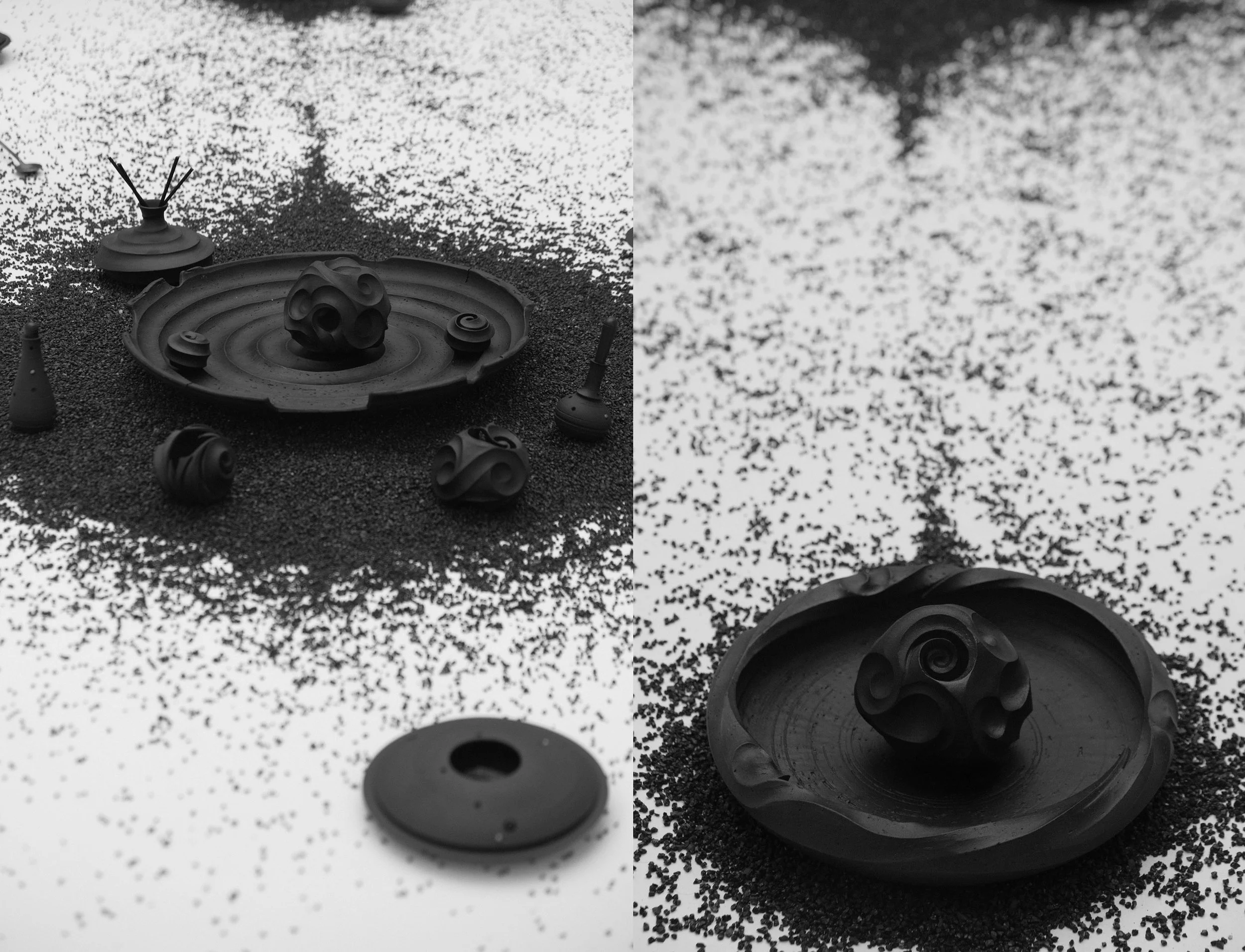
Subtractive black ceramic works by SMOGE SPACE, existing between vessel and sculpture.
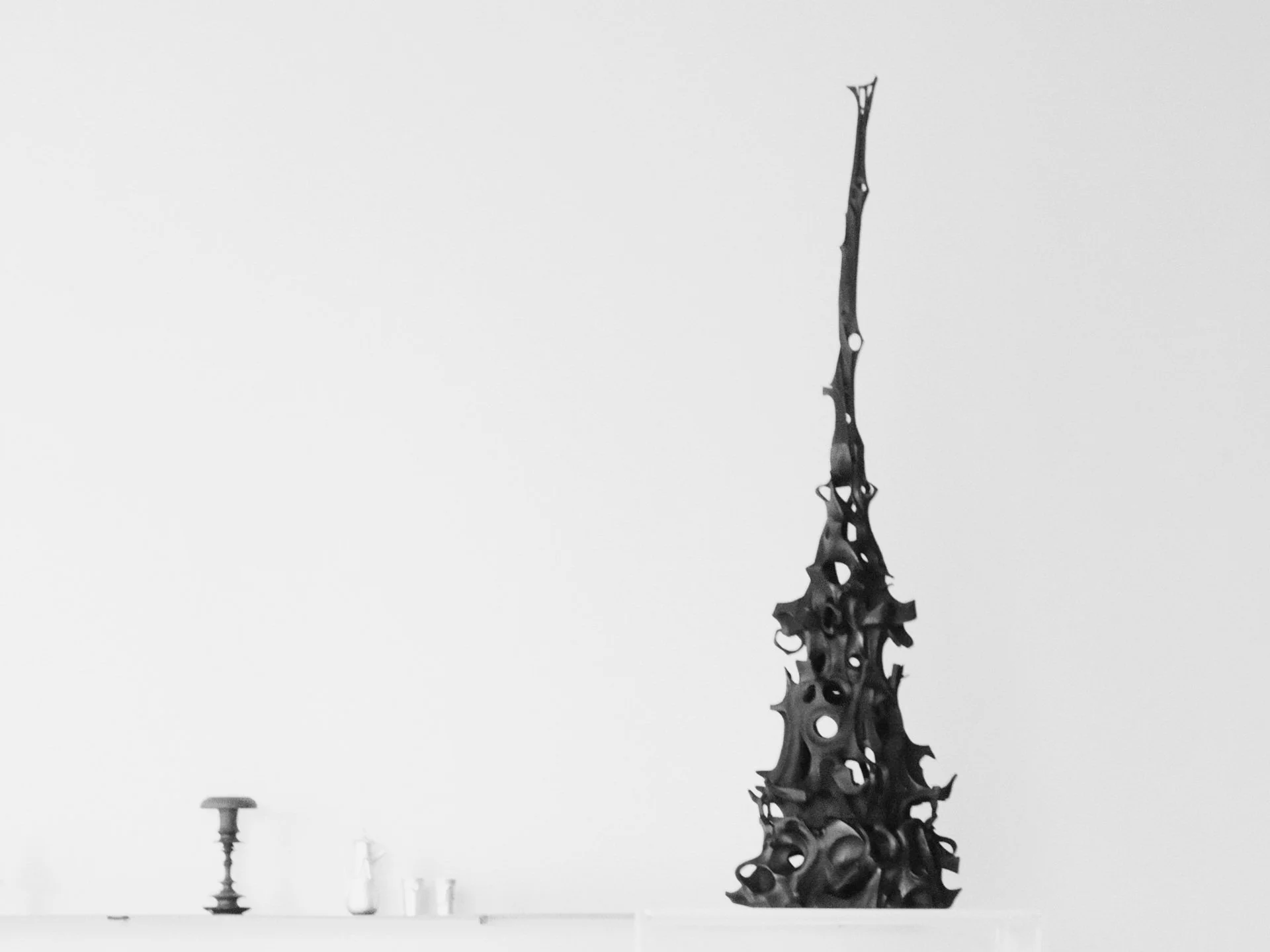
Black Ridge, black ceramic sculpture
SOTACA’s Position
At SOTACA, we recognize that contemporary Chinese functional art is entering a defining new chapter. These works do not seek to repeat history, nor are they defined by tradition alone. Instead, they demonstrate how ceramics, as a medium deeply rooted in China, continue to evolve through original thought, idiosyncratic processes, and a contemporary sensibility.
Our role is clear: to bring visibility to artists whose practices deserve sustained attention, and whose works are not only worth understanding, but worth collecting. Chinese ceramic culture is not static; it is a living lineage. Through the hands of these contemporary artists, it is becoming more diverse, more confident, and more luminous.
