
Renqian Yang
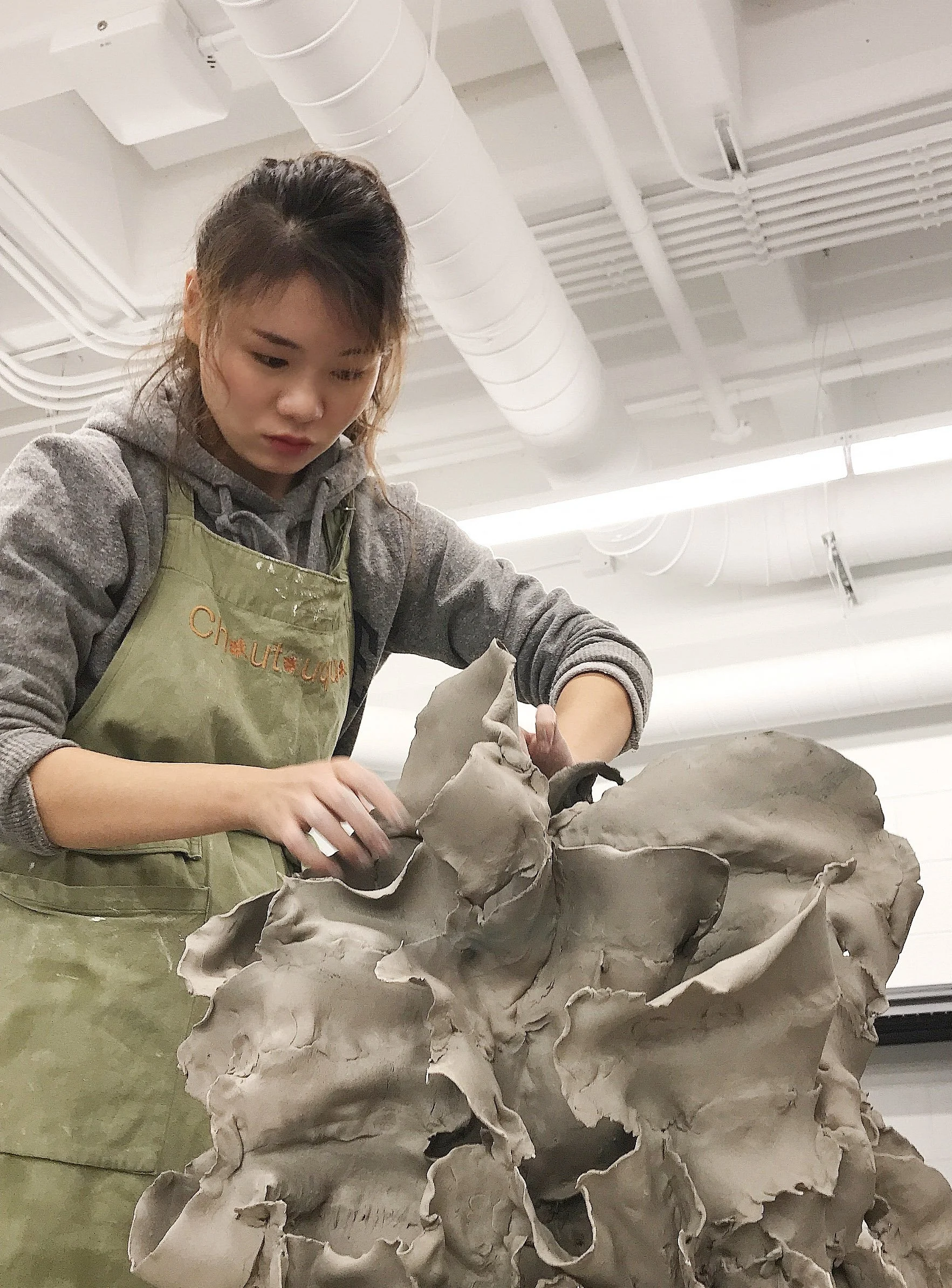
Renqian Yang is a Chinese-born, US-based ceramic artist whose practice moves between two cultural landscapes. For her, clay is not simply a material for shaping form. It is a medium for capturing subtle emotional states, fleeting sensations, and the fragile shifts that exist between stability and collapse, closeness and distance.
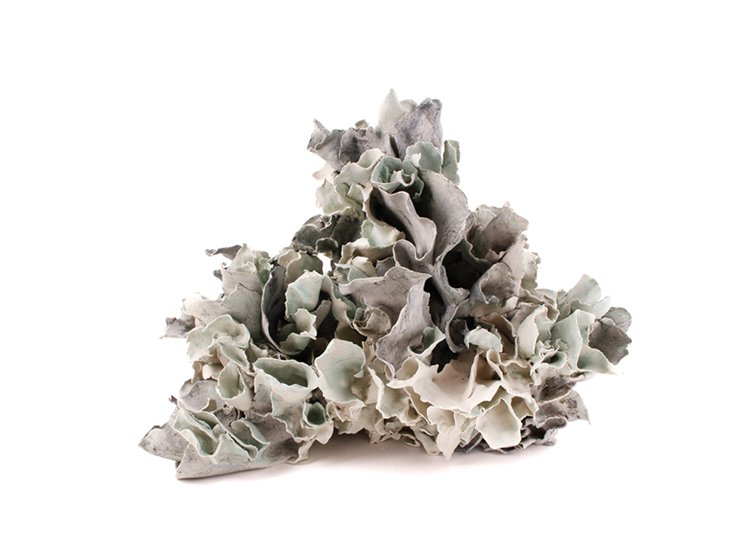
Her process involves stacking, pressing, folding, tearing, and allowing clay to fall into moments of imbalance. Surfaces rise, crack, buckle, and unfold as if recording a psychological rhythm. Rather than forcing a final silhouette, Yang often leaves the work in a state of becoming. The form holds its tension, as though it has paused in the middle of transformation.
This embrace of the unfinished is deeply connected to the Daoist view of change. Nothing remains fixed. Emotion, identity, and memory are always moving. Clay simply offers a temporary vessel in which these shifting states can take form. Soft matter becomes weight through fire, much like a passing emotion becoming a trace one can touch.
Her work has received international recognition and was acquired by the Victoria and Albert Museum in London in 2024. She currently serves as Assistant Professor of Ceramics at the State University of New York at Oswego.
In the philosophy of the Five Elements, earth represents holding, transforming, and generating. Yang’s sculptures embody these qualities. They turn soft emotion into grounded physical presence, offering viewers a place to rest between vulnerability and strength.
SOTACA on Renqian Yang
In Renqian Yang’s work, clay is not a medium but a sensory terrain. Each fold, edge, and rupture carries traces of emotion and time.
Her sculptures sit between emergence and collapse, allowing the viewer to sense the moment before form settles.
What appears fragile is often the source of the work’s quiet power.
SOTACA Pairing Note
Renqian Yang’s ceramic sculptures integrate seamlessly into minimalist, contemporary, wabi-sabi, and naturalistic interiors. Their matte surfaces and organic contours resonate beautifully with neutral walls, raw wood, fine stone, and linen textures.
Placed on a mantel, console, niche, or pedestal, her works become a subtle focal point that elevates the emotional atmosphere of a space without overwhelming it. The pieces bring softness, depth, and a quiet sense of movement, enriching both residential and gallery environments.
杨人倩成长于中国,后旅居美国,她的创作长期在两种文化语境之间游走。陶土在她手中,不只是塑形的材料,而是一种用来捕捉细微情绪与心理状态的媒介。她关注的是那些日常生活中一闪而过的感受,介于稳定与崩塌、靠近与疏离之间的小小瞬间。
在创作过程中,她以手工堆叠、按压、折叠、撕裂等方式,让形体在不断生成与塌陷中寻找暂时的平衡。作品表面或起伏、或开裂、或缓慢扩张,像是在记录某种正在发生的情绪波动。她并不急于给形体一个清晰答案,而是保留过程中的不确定,让作品停留在“尚未完全定型”的状态里。
这种对“未完成”的坚持,与她受道家思想影响有关。她相信世界始终处在变化之中,情绪、记忆和身份都在流动,陶土只是在这一流动中为经验提供了一个被短暂凝结的形体。柔软的土在高温中烧结成有重量的存在,就像短暂的情感被凝固为可触摸的痕迹。
她的艺术实践获得国际认可,并于 2024 年被英国Victoria & Albert Museum收藏。
在五行中,土象征承载、转化与生发。杨人倩的作品正体现着这种力量——将柔软情绪转化为空间中的稳静之形,为观者在脆弱与坚硬之间提供片刻的停驻。
SOTACA 致 杨人倩
在杨人倩的作品中,陶不再只是器皿,而是情绪与记忆的肌理。她以手的反复触碰塑造出介于生成与塌陷之间的形体,让柔软的情感在土之躯体中获得片刻停留。
SOTACA 搭配建议
杨人倩的作品具有高度的空间适配性。
她的柔和褶皱作品适合融入极简、侘寂、自然主义等安静空间;而她鲜艳、外放的雕塑形态,也能在当代、复古、工业风与混搭风中自然成立。
无论色彩是轻柔还是鲜明,她的陶塑都能与中性色墙面、天然材质、金属或木质家具形成对话,让空间呈现更丰富的层次与艺术气息。